
Therapy Options in Berlin: In-Person vs. Online Care
Struggling to find private therapy in Berlin? Explore the difference between public GKV and private options, understand the importance of Approbation, and learn why online psychodynamic therapy is a clinically validated alternative.
01
March


Arjun Randhawa
Clinical Psychologist
Finding private therapy in Berlin often comes down to a choice between two very different timelines, months on a waiting list for an in-person, insurance-covered slot, or a considerably faster route through private, English-speaking care, in person or online, that still meets rigorous professional standards. This guide breaks down exactly how the German system works, and why online psychodynamic therapy has become such a practical option for English-speaking residents specifically.
Navigating the Berlin Therapist Shortage (The Warteliste Challenge)
Berlin’s mental health system is, on paper, excellent. In practice, access is the real bottleneck, particularly for English speakers. Public insurance, or Gesetzliche Krankenversicherung (GKV), covers psychotherapy fully, but only through therapists holding a Kassensitz, a limited public billing license. Because the number of these licenses is capped by the state, demand regularly outpaces supply, and waiting times of three to six months are common in major cities like Berlin.
For English-speaking residents, the picture narrows further still. English-speaking therapists with a Kassensitz are a small subset of an already constrained pool, which means the realistic wait for insurance-covered, English-language therapy in Berlin can stretch even longer than the general average. None of this reflects poorly on Germany’s healthcare system, which remains genuinely comprehensive. It simply means that anyone needing support sooner rather than later, which is most people once they have decided to seek it, usually needs to understand the alternative routes available.
Understanding the German System: Approbation and Insurance
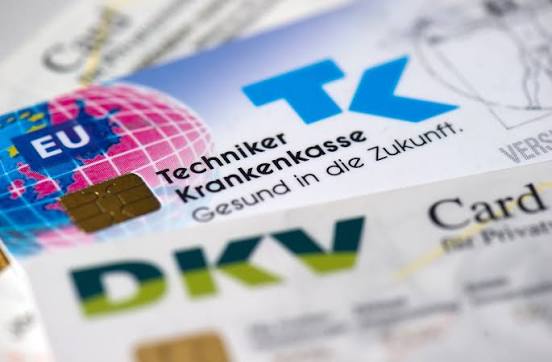
Before choosing a path forward, it helps to understand exactly what you are evaluating, because German credentialing terminology carries real, specific meaning.
GKV (State) vs. PKV (Private) Insurance: What You Need to Know
GKV (Public Insurance) covers psychotherapy sessions in full once you find a Kassensitz-holding therapist, but access is the constraint, not cost. Expect an average wait of three to six months for an available slot in Berlin, and a shorter list of English-speaking options within that pool.
PKV (Private Insurance) or Self-Pay removes the Kassensitz bottleneck entirely, since private practitioners are not limited by the same licensing cap. This generally means considerably faster access, often within weeks rather than months, though the cost is carried privately or through a private insurance plan rather than the public system.
For many English-speaking residents facing a genuine and current need, the practical choice becomes clear fairly quickly, months of waiting within GKV, or faster private access.
The Importance of Verified Accreditation

Regardless of which route you take, the credential that actually matters is Approbation, Germany’s official state license to practice psychotherapy. It requires a completed psychology degree, three to five years of additional postgraduate clinical training, and a rigorous state examination. A therapist holding Approbation, whether or not they carry a Kassensitz, has met Germany’s full clinical training standard. You can learn more about these requirements through the Bundespsychotherapeutenkammer (BPtK).
This distinction matters because "therapist" is not, on its own, a protected term in every context. Verifying Approbation specifically, rather than assuming any provider labeled a therapist has met this standard, is a meaningful and necessary step before beginning work with anyone.
The Case for Online Psychodynamic Therapy
Given the realities above, online psychodynamic therapy has become a genuinely practical, not merely convenient, option for many English-speaking residents in Berlin.
Why Proximity Matters Less Than Therapeutic Alliance
Decades of research point to one consistent finding, the therapeutic alliance, the working relationship and trust between client and therapist, predicts outcomes more reliably than the specific setting or modality used. This matters directly for the in-person versus online question, because it means the physical distance between you and your therapist is not, in itself, the variable that determines whether therapy works.
This is now well supported by direct research on format as well. The American Psychological Association (APA) overview of telehealth notes that teletherapy has demonstrated outcomes similar to traditional in-person therapy across a range of concerns, including anxiety, depression, and adjustment-related difficulty, precisely the kinds of concerns that bring many expats to therapy in the first place. In other words, the research does not support treating online psychodynamic therapy as a lesser substitute. It supports treating it as a genuinely comparable option, chosen for the access and consistency it offers rather than as a compromise.
Overcoming Digital Barriers: 3 Tips for a Successful Session

A small amount of preparation meaningfully improves the online therapy experience:
Test your connection and setup beforehand, not moments before the session. A brief camera and audio check earlier in the day removes a source of last-minute stress that has nothing to do with the actual work ahead.
Use headphones rather than speakers. This improves both audio clarity and privacy, particularly useful in shared living situations common among expats in Berlin.
Treat the transition into and out of session deliberately. Without a commute to create natural separation, take even two or three minutes before and after a session to settle in and then decompress, rather than moving straight from therapy into the next task on your list.
What to Look for in an Online Therapist
Choosing an online provider requires the same rigor as choosing any clinician, plus a few additional considerations specific to remote care.
Security, Privacy, and Why Its Complicated Verification Matters
Confidentiality and data security are foundational to therapy, and this matters even more in a remote context, where video platforms and data handling practices vary considerably between providers. A credible online therapist should be able to explain, clearly, how session privacy and data protection are handled.
Verifying credentials at a distance can also be genuinely difficult when you are unfamiliar with a country’s licensing terminology, which is exactly the gap Its Complicated, EU is designed to close. Rather than leaving clients to independently confirm Approbation, registration, and training across an unfamiliar system, Its Complicated conducts a thorough vetting process for every therapist listed on the platform before they ever appear as an option. For English-speaking residents in Berlin weighing an online provider, this removes a genuine source of uncertainty from an already effortful decision.
Creating a Safe Sanctuary for Your Session

Where you sit for a session shapes how open you are able to be within it. A few concrete steps make a real difference:
Choose one consistent spot, ideally the same location each week, so your nervous system begins to associate that specific space with the work rather than with the rest of your day.
Remove visible reminders of unrelated tasks. A laptop showing a half-finished email, or a stack of unopened mail in the frame, quietly pulls attention even when you are not consciously aware of it.
Add one small, deliberate comfort object, a particular blanket, a specific chair, or a candle you only light for this purpose, so the space signals safety rather than simply functioning as wherever you happened to sit down.
Ensure genuine privacy, closing doors and, where relevant, letting others in your household know not to interrupt, so the session can hold the same confidentiality it would in an office.
This isn't about creating an aesthetic. It's about giving your nervous system a consistent, reliable cue that this is a space for the work, which measurably supports the depth of what becomes possible within a session.
Taking the First Step: How to Book a Consultation
If the Berlin Warteliste has left you waiting, or if the idea of navigating an unfamiliar system in a second language feels like its own obstacle before the actual work has even begun, a private, verified, English-speaking consultation is often the fastest and most straightforward next step.
An initial consultation is a chance to ask about training, approach, and fit directly, without committing to anything further. From there, sessions can typically begin within days rather than months.
Are you ready to explore your patterns in a safe, confidential space?
Book your initial consultation here.
About the Author: Arjun Randhawa is a Clinical Psychologist and Psychodynamic Therapist offering online therapy for Berlin residents and English-speaking expats across Germany, with a focus on anxiety, relationship patterns, and long-term structural change. He is verified and listed through Its Complicated, EU, which conducts thorough credential checks for all therapists on its platform.
How This Was Written: This article was reviewed for accuracy regarding German mental health licensing and current telehealth research prior to publication. It is intended for general educational purposes and is not a substitute for individualized clinical assessment.